Benderski
 

Biography

Amichai Benderski was born in Montevideo, Uruguay, into a Jewish home in 5748/1988. He started his formal training by studying graphic design at ORT University, where he obtained a BA. Among his works, the following stand out: the visual identity system of Peñarol’s stadium and the brand for Women, Peace and Security of the United Nations Security Council.

The Social Poster Exhibition is part of The Uruguayan Plan for Human Rights and it was declared of interest by the Ministry of Education and Culture. The World Peace Symbol, featured in Designing Peace, an exhibition showcased at the Museum of Craft and Design in San Francisco and at the Cooper Hewitt Smithsonian Design Museum in New York.

Talks, workshops and exhibitions were held in Jerusalem, Łódź, New York, Ottawa, Toronto, Warsaw and in five cities of Uruguay.

He is the founder of La Patria, Uruguayan archive of design.


Solo Exhibitions

Bezalel Academy of Arts and Design, Jerusalem. December 2024.
Tres Mundos, La Barra. January 2020.
Embassy of Uruguay in Ottawa, Ottawa. November 2019.
University of Toronto, Toronto. November 2019.
University of Warsaw Library, Warsaw. May 2019.
Montevideo Cabildo, Montevideo. September 2018.
IMPO, Montevideo. June 2018.
Consulate of Uruguay in New York, Manhattan. April 2018.
Ateneo, Montevideo. February 2018.
Peace Table, Montevideo. December 2017.
INJU, Montevideo. December 2017.
City Hall of San José, San José. November 2017.
Centro Socio Cultural, Young. September 2017.
Casa Artigas, Sauce. August 2017.
ORT University, Montevideo. September 2017.


Workshops

Bezalel Academy of Arts and Design, Jerusalem. December 2024.
School 206, Montevideo. July 2022.
School 9, Villa La Paz. November 2021.
San Juan Bautista College, Colonia. September 2021.
School 2, Colonia. September 2021.
Cultural Center of Spain, Montevideo. August 2021.
George Brown College, Toronto. November 2019.
Sheridan College, Toronto. November 2019.
Petrona Viera School, Montevideo. November 2019.
Akademia Sztuk Pięknych, Lodz. June 2019.
Instituto de Estudios Ibéricos, Warsaw. June 2019.
Centro Cultural de España, Montevideo. December 2018.
INJU, Montevideo. July 2018.
City College of New York, New York. May 2018.
Consulate of Uruguay in New York. April 2018.
Peace Table, Montevideo. December 2017.
INJU, Montevideo. December 2017.
Centro Socio Cultural, Young. September 2017.
Casa Artigas, Sauce. August 2017.


Talks

Bezalel Academy of Arts and Design, Jerusalem. December 2024.
Rochester Institute of Technology. New York. April 2022.
Letterform Archive, San Francisco. November 2021.
PJAIT, Warsaw. May 2021.
University of Delaware, Delaware. February 2021.
PJAIT, Warsaw. December 2020.
George Brown College, Toronto. November 2019.
Sheridan College, Toronto. November 2019.
Akademia Sztuk Pięknych, Lodz. June 2019.
Instituto de Estudios Ibéricos, Warsaw. June 2019.
PJAIT, Warsaw. June 2019.
WIT Szkoła Wyższa pod auspicjami pan, Warsaw. June 2019.
Uruguay Cartel, Colonia. May 2019.
Centro Cultural de España, Montevideo. December 2018.
INJU, Montevideo. July 2018.
Montevideo Cabildo, Montevideo. September 2018.
City College of New York. May 2018.
Consulate of Uruguay in New York. April 2018.
Peace Table, Montevideo. December 2017.
INJU, Montevideo. December 2017.
Centro Socio Cultural, Young. September 2017.
Casa Artigas, Sauce. August 2017.


Press

Canal 10 🇺🇾 / Canal 12 🇺🇾 / El Observador 🇺🇾 / El País 🇺🇾 / Semanario Hebreo 🇺🇾 / Radio Sarandí 🇺🇾 / La Diaria 🇺🇾 / Voces 🇺🇾 / I’ts Nice That 🇬🇧 / Astra Magazine 🇺🇸 / Communication Arts 🇺🇸 / The Daily Heller: Posters of Uruguay 🇺🇸 / The Daily Heller: Uruguay, Deco Style 🇺🇸 / The Daily Heller: Tipo Uruguay 🇺🇸 / TypeMag 🇺🇸 / Slanted 🇩🇪 / Grafikmagazin 🇩🇪 / People of Print 🇬🇧 / Design Reviewed 🇬🇧 / Domus 🇮🇹 / Design Milk 🇺🇸 / The Daily Heller: Uruguay’s Annual Day for Books 🇺🇸 / Monocle 🇬🇧 /


Interview

Why did I become a designer?

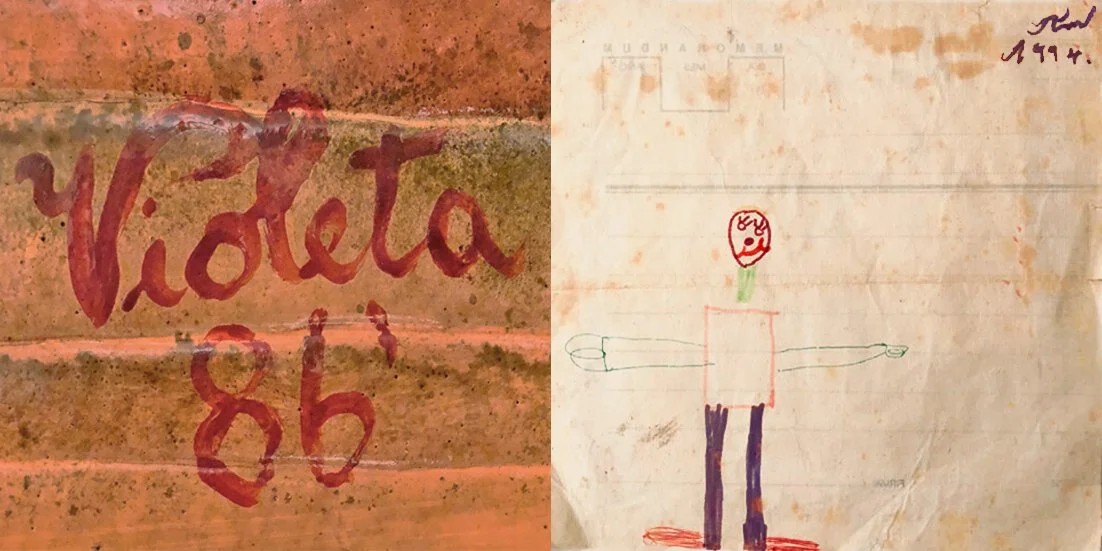
I have been interested in visual language since I was a child, thanks to my mother. Somehow it struck me that she signed her paintings, so I also started to sign my drawings. This was my first approach to type as I designed my signature by taking my mother’s as a reference.


What are my main accomplishments?

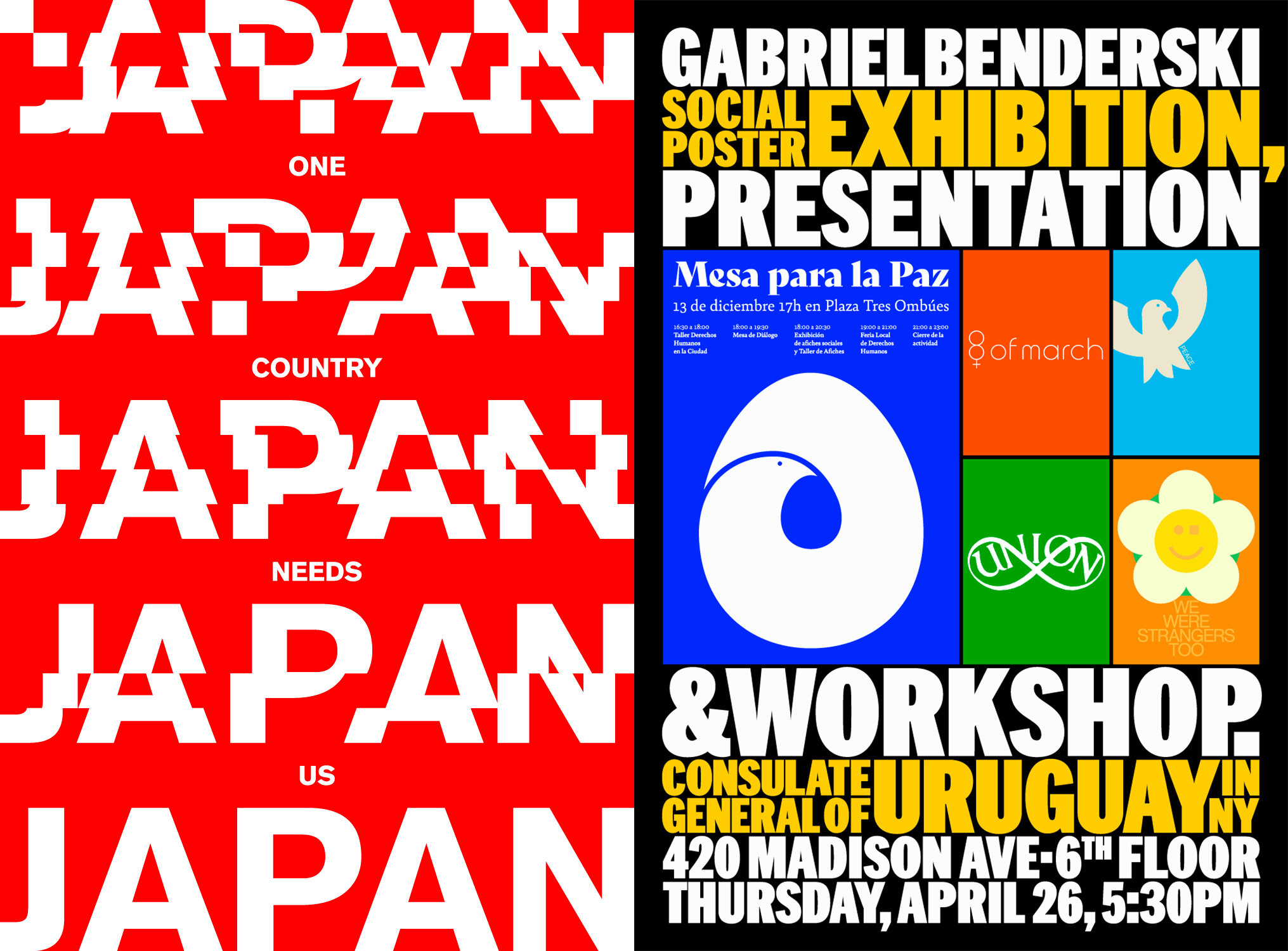
There are two projects that I would like to mention; the first one is a personal project that is being carried out now, an exhibition of social posters. A couple of years ago, I started designing social posters being the first one for the massive earthquake that hit Japan in 2010. I realized that the collection of posters worked to promote different subjects that are present in the Human Rights agenda, but time made them decontextualized, so I decided to unite them under an exhibition. This made the posters able to continue functioning as a communication channel today. The exhibition was held in Jerusalem, New York, Warsaw, Toronto, Ottawa, and in five cities around Uruguay with the aim of demonstrating how graphic design allows us to use it as a tool that promotes tolerance. This activity was declared of educational interest by the Uruguayan Ministry of Education & Culture and is part of the National Plan for Human Rights Education. The other project that I will like to share is the identity and way-finding system for the stadium of Club Atlético Peñarol, the oldest and biggest football team in Uruguay. The project was developed with Fabian and Santiago Bicco, and it was the longest one in which I had ever worked; more than nine months with many meetings between the board and us. The design of our stadium is an immense responsibility. We, as designers, had the opportunity to not only design for the client, but somehow we were the client as the three of us are fans of Peñarol.


social-poster-afiche-cartel-exhibition-exhibicion-japon-japan-gabriel-benderski.jpg
estadio-peñarol-campeon-del-siglo-gabriel-benderski
 

Who influenced me?

The list is extensive, but if I have to make a short, I would say: Alan Fletcher, Bob Gill, George Lois, Ivan Chermayeff, Josef Müller-Brockmann, Jurriaan Schrofer, Paul Rand, Stefan Kanchev and Wilhelm Deffke. If I have to make the list even shorter, I will say Lella & Massimo Vignelli. Their understanding of simplicity is unique. People tend to speak with complicated words to explain something to look more qualified, but with them is the complete opposite; they would talk about something complicated and explain in simple and ordinary words. Lella & Massimo’s love for design is one of a kind; they worked hard not only for their clients, they even created a design school to promote their approach and to educate future generations. They fought against ugliness while they were with us, and they still do it today, thanks to his legacy. Also, there is a special person that I have to mention: Fabián Bicco Bernal, the work of a designer is usually not a one-person job, and I have been working with Fabián for many years. He is the main person with whom I have shared my growth as a professional, and he is an essential part of what I’m today. Last but not least, my professors. Álvaro Cármenes and Marcos Larghero. This team of teachers were the guides on my way to professionalism. The daily work of my mentors is a gift of life that built a solid foundation on which I leaned.


What is the toughest challenge?

The hardest challenge will always be to overcome myself. For that, I ask myself a pretty old question, ‘to be or not to be’. Do I want to be what I imagine for myself? Do I want to be a better designer than I was yesterday? Do I want to be a leading designer for my community? Do I want to feel pleased with my portfolio? Three things are needed to overcome yourself and be successful, as Massimo once said: vision, courage and determination. So how I develop these three things? By working hard and showing up. Hard work will give me confidence in my skills as a designer, and showing up will help me exchange thoughts to understand how the future will be shaped.


What was the greatest disappointment?

The biggest disappointment occurred in 2015 when I couldn’t find the right job. Months went by, and I couldn't find a job, so I decided that it would be better to work in something unrelated to design. Every day, for nine months, I asked myself what I had done wrong, why this was happening to me, I had a degree as a designer and couldn't work as one. They were nine long months in which I had to stand. Sometimes life is hard, but when you look back, you realize how absurd it is; the job that got me out of the most demoralized job I ever had was the best job I could ever have imagined, designing a stadium for the team I’m a fan.

 
1891-uruguay-benderski-futbol-montevideo-design-graphic
 

What is the added value of my work?

Then there is the value that one gives to design as work, that is, how valuable is what one does as well as how much our work is worth to the client. I value and love good design; I try to spread what I feel for design because the love for my vocation is contagious. If I had to define my intention as a designer, I would say that I seek to unite good design with successful design.


What are my plans for the future?

I don’t know what will happen in the near or distant future and this uncertainty is what excites me the most. It sparks curiosity and opens doors to endless possibilities, encouraging me to pursue whatever I set my mind to. While nothing in life is guaranteed, least of all the future, this unpredictability is precisely why I choose to focus on the present. Not making detailed plans for the future doesn’t mean I’m unprepared. The best way to prepare for what lies ahead is to build a strong foundation in the here and now. This approach guides me to where I need to be. Staying grounded in the present and dedicating my full effort to each moment allows me to adapt to whatever the future may bring.